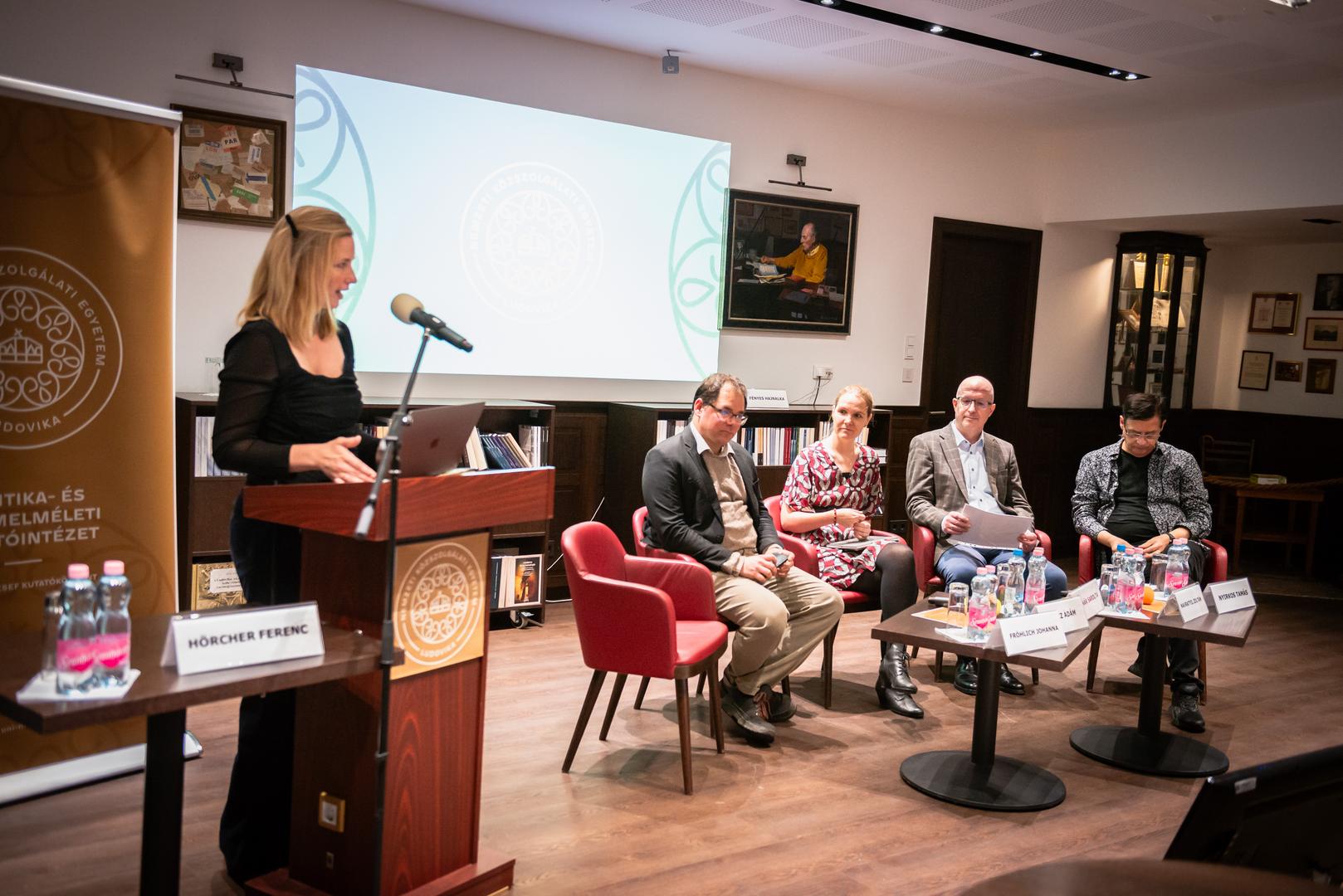
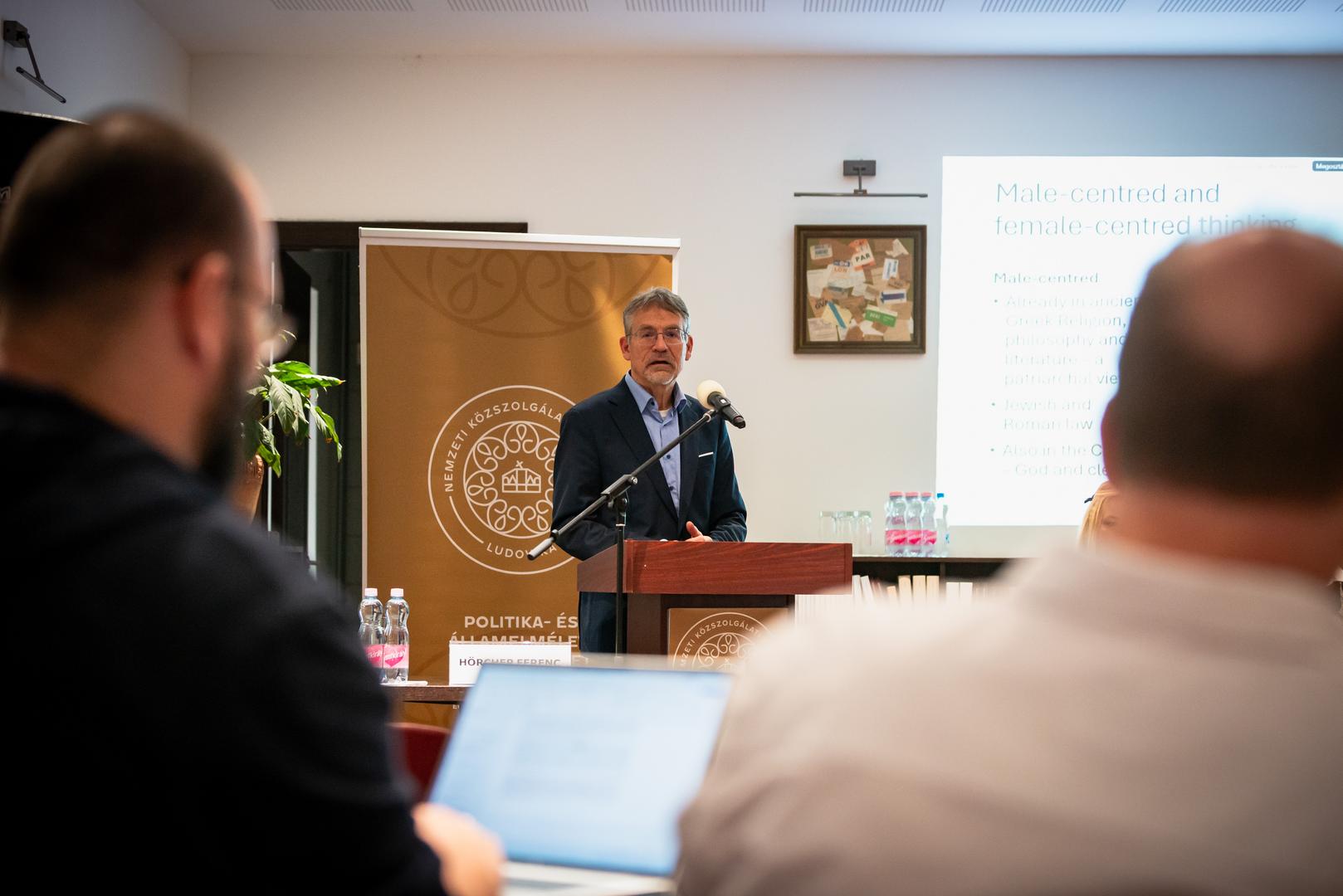
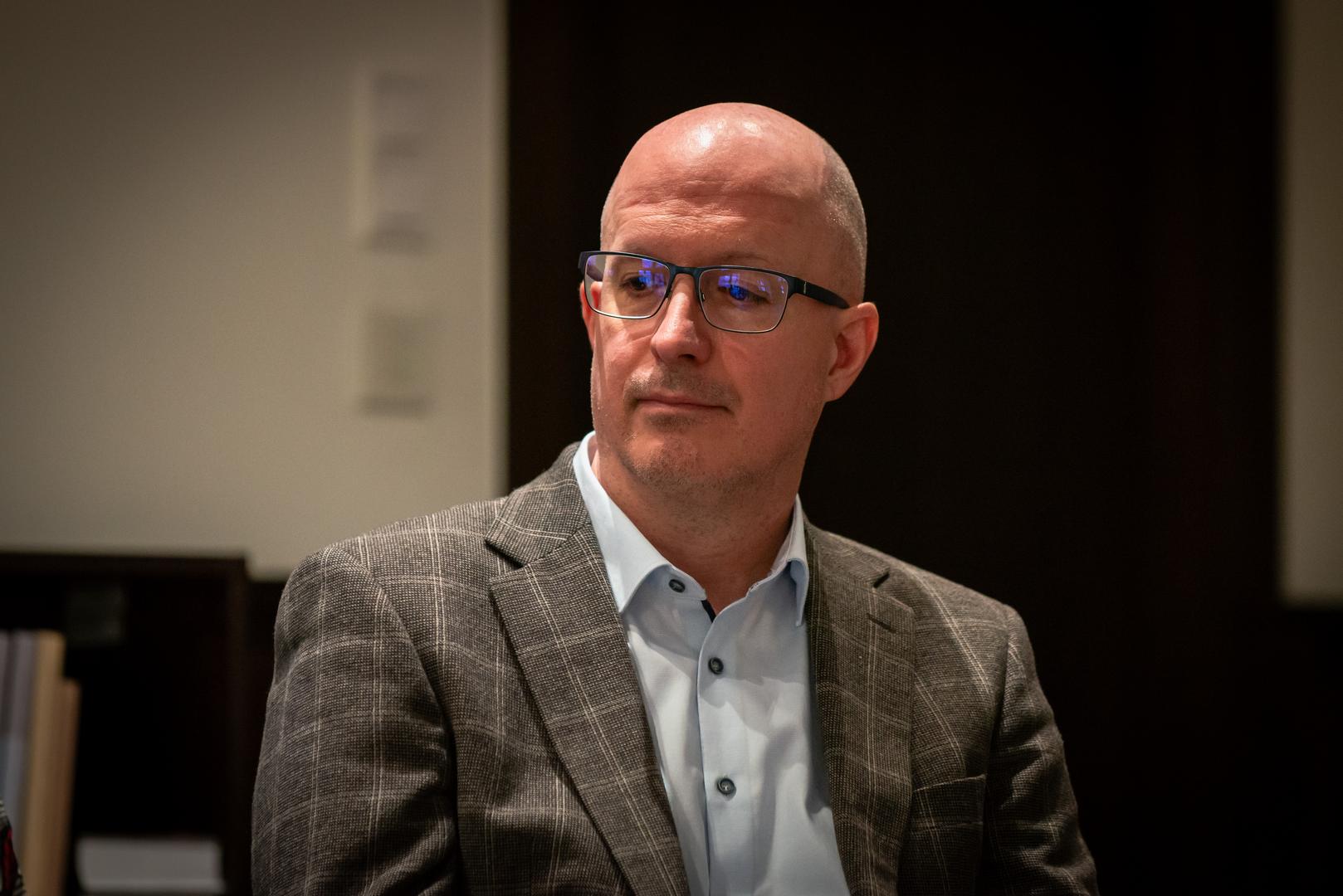
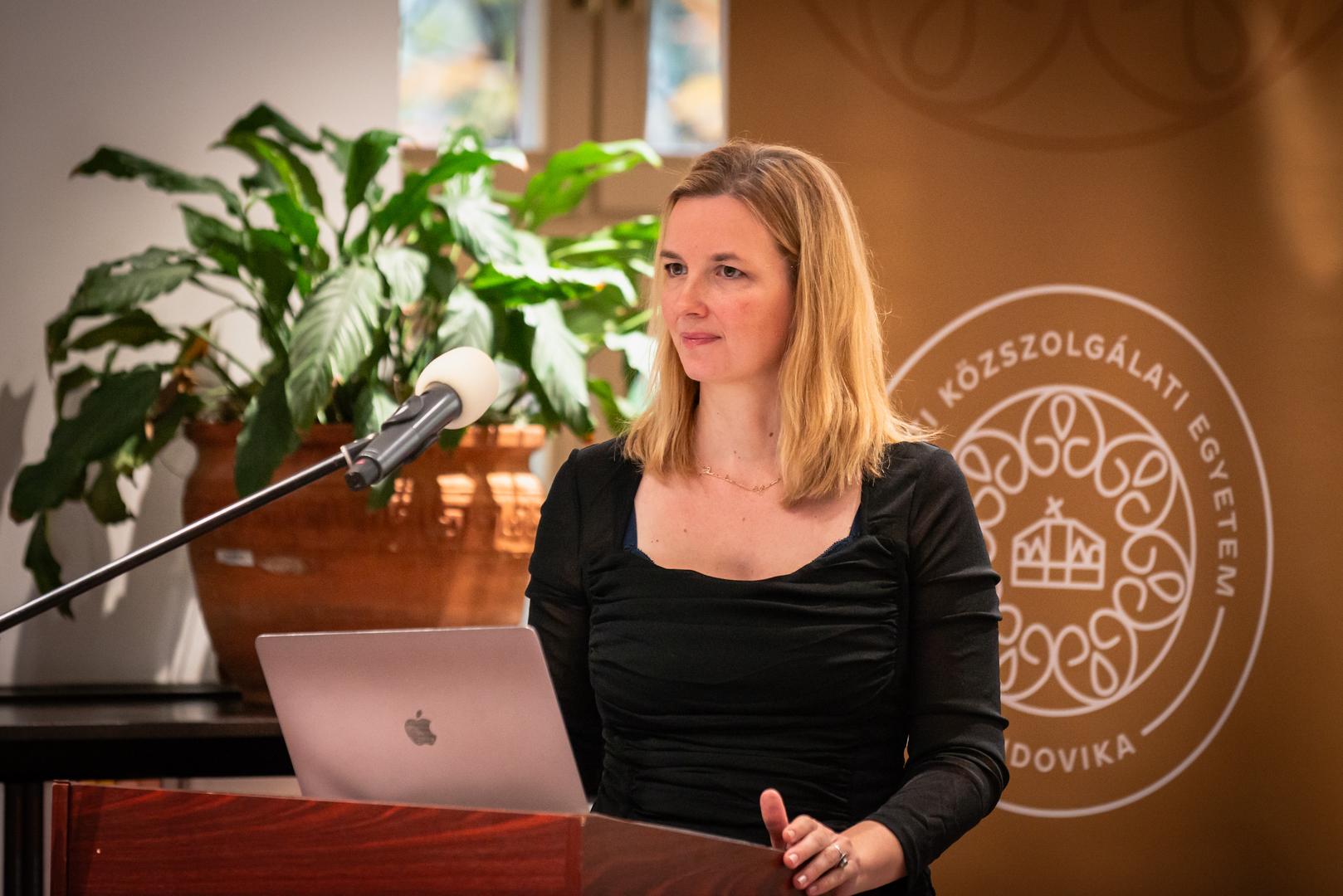

On 18th November 2026, an international conference organized by the Research Institute for Politics and Government of the Ludovika University of Public Service was staged in Budapest at the Side Building of the Ludovika Campus, discussing the absence of motherhood as a concept from political communication, and the possibilities of its articulation in the vocabulary of political and legal philosophy.
The event got under way with the welcoming speech of Johanna Fröhlich, senior research fellow of the Research Institute for Politics and Government. She mentioned motherhood, fatherhood, and family as represented in the discourses of political philosophy, jurisprudence, and various disciplines of social sciences. She raised the question why there is a lack of vocabulary related to the articulation of these topics of vital relevance for the flourishing of human society. She also stressed the need to moving forward in a positive direction in regard of this issue.
The next speaker, Ferenc Hörcher, head of the Research Institute for Politics and Government acknowledged the importance of integrating the topic of motherhood into political philosophy and constitutional thought, which is the stake of the research based on international cooperation under the leadership of Johanna Fröhlich. Prof. Hörcher than held his keynote lecture in which he compared the strongly contrasting political philosophies of Harvey Mansfield and Edith Stein, both rooted in the same background of Husserlian phenomenology. While Mansfield built his political philosophy around the principle of masculinity, Edith Stein focused on the integration of the value of femininity into philosophy based on the viewpoint of phenomenology and Catholic personalism. She considered women to be in possession of a special knowledge, the capability of paying special attention towards others in interpersonal relations through support and motherhood, giving them special dignity and a central role in the functioning of families and nations. Pope John Paul II officially integrated the thought of Stein into the doctrine of the Church.
The first panel of the event, titled “Maternal stutterings – methodological challenges for a non-existent philosophy” was moderated by Johanna Fröhlich, who opened the panel with an overview of how the inability to properly assess the meaning of motherhood affects the proper evaluation of its social importance. She traced back the source of this inability to having too many words that relate to motherhood without a coherent and well-defined meaning. According to her, this problem is largely caused by the individualistic viewpoint of political and legal discourse that makes it difficult to express the dignity of dependence and the vital social importance of the responsibility to care.
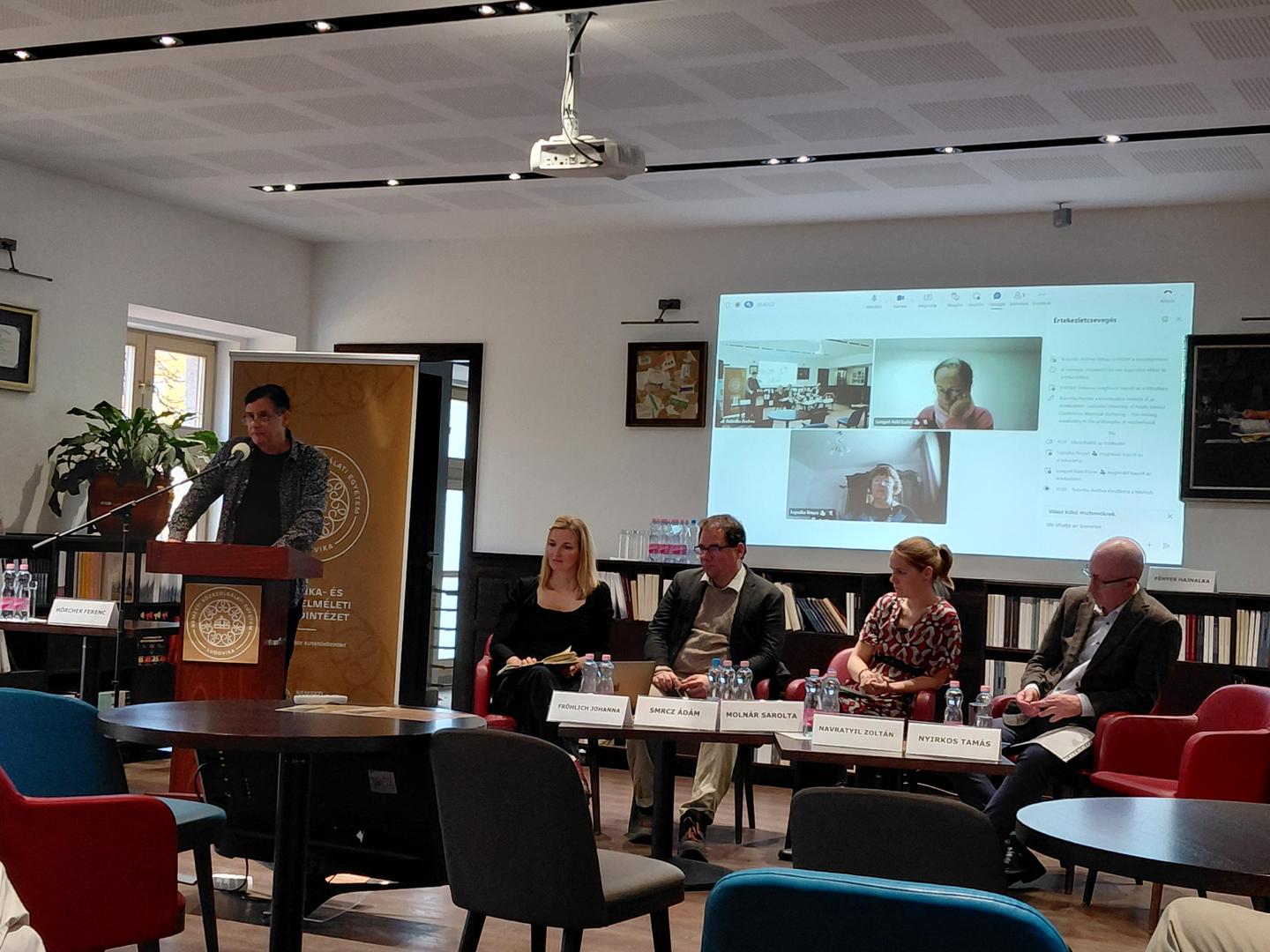
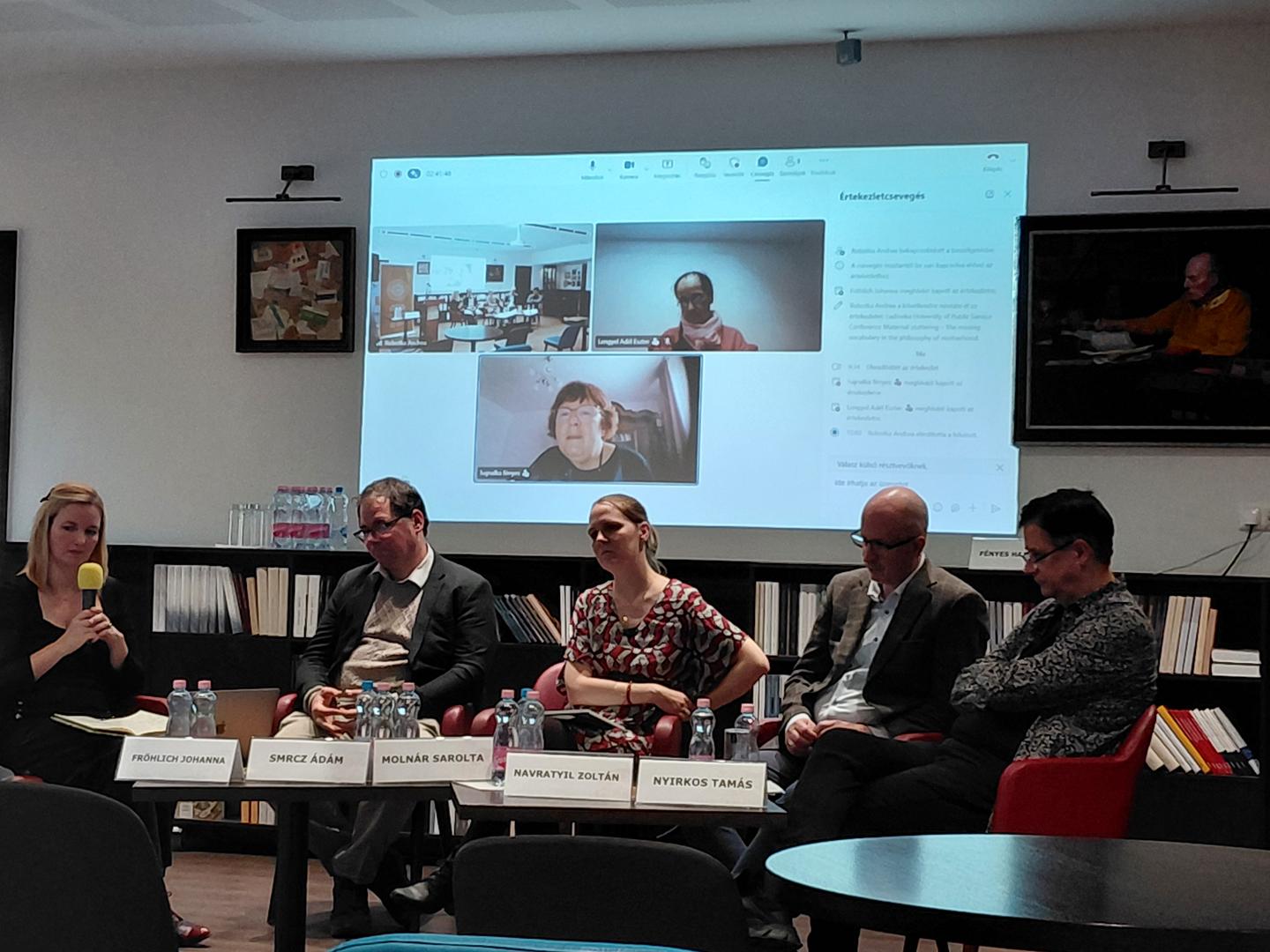
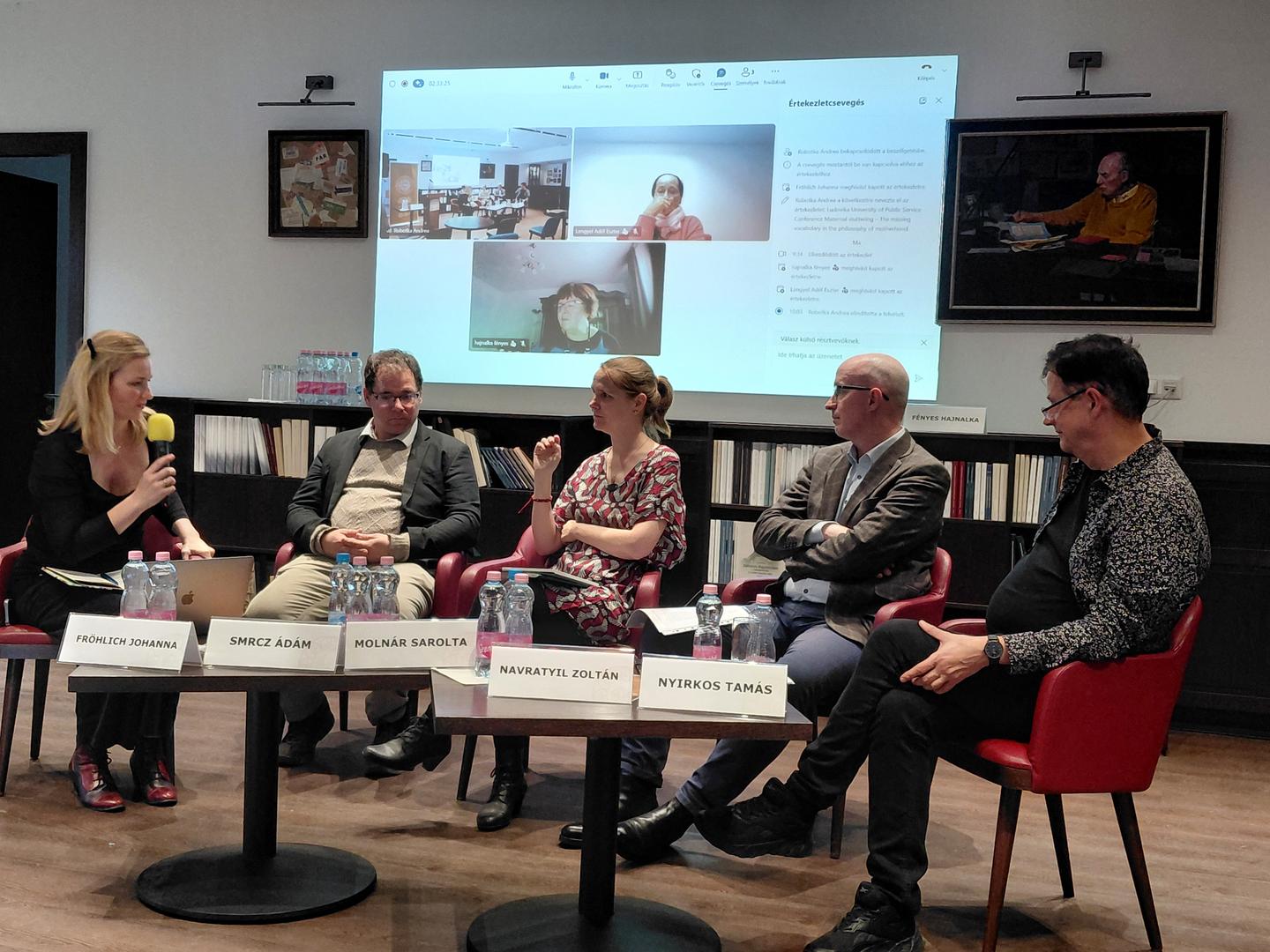
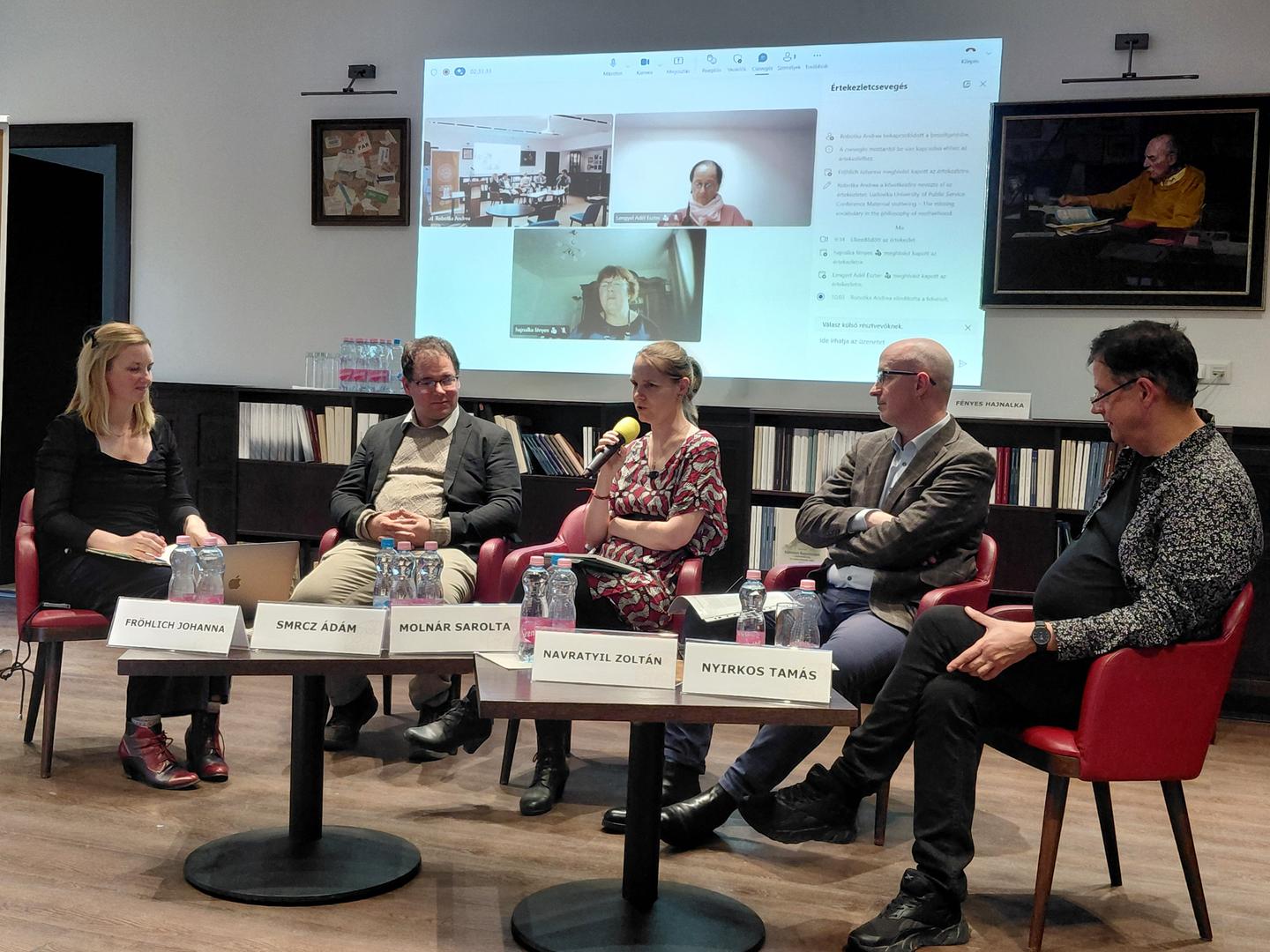
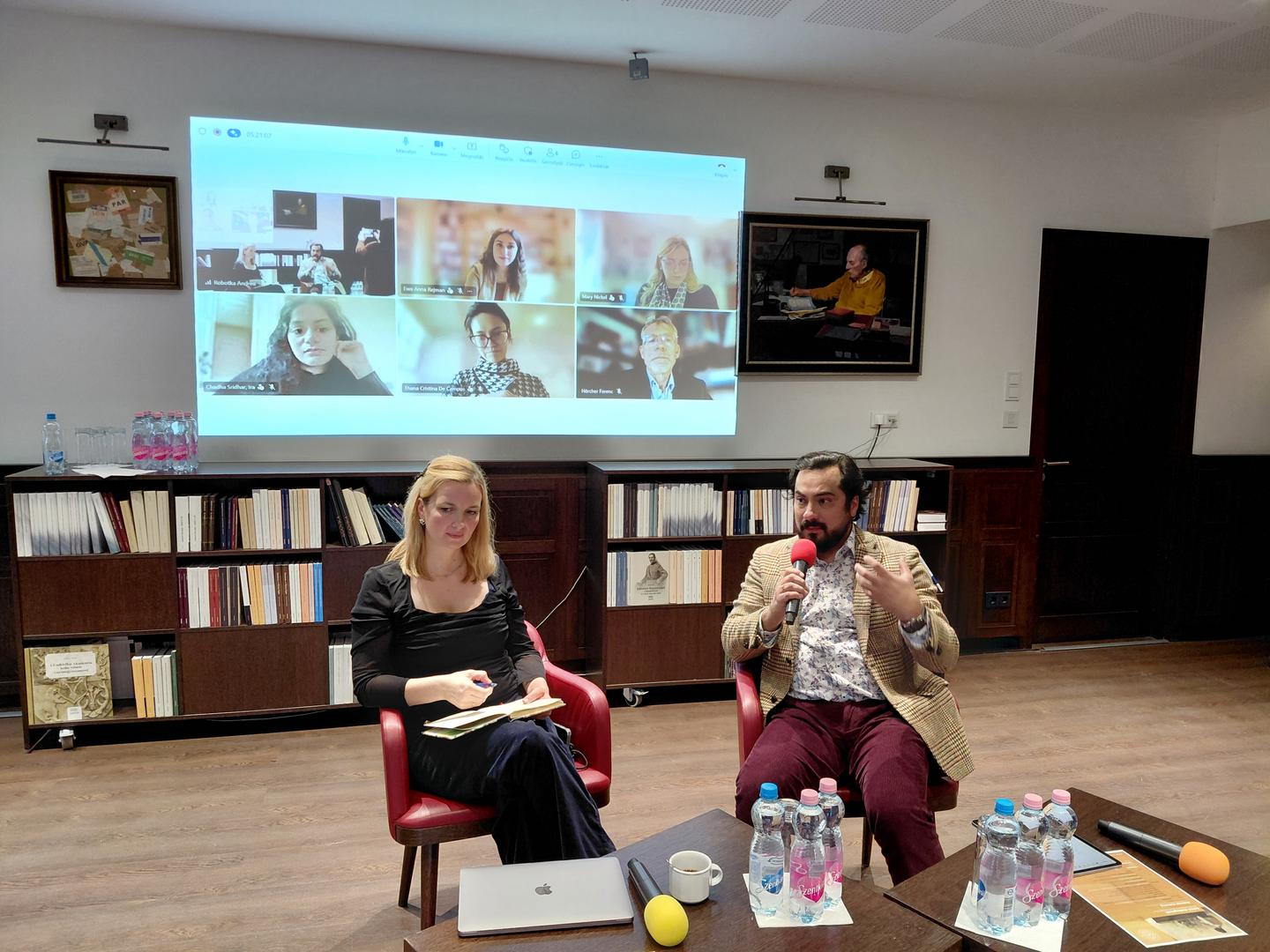
In her online presentation, Hajnalka Fényes (University of Debrecen) assessed the topic of motherhood from a sociological perspective focusing on historical changes in the social perception of motherhood and fatherhood, and gave an overview of her research on the involvement of parents in childcare at home and related to school. Tamás Nyirkos (RIPG) focused on the lack of a coherent vocabulary and the inherent contradictions of the contemporary discourse about women. He compared the different waves of feminism and stressed the different perceptions of justice from male and female perspectives that create tension, which a Christian understanding does not necessarily have to ease.
The lecture of Zoltán Navratyil (PPKE JÁK) addressed the problems regarding motherhood in contemporary civil law. As a result of the emergence of reproductive technology in medicine, the meaning of motherhood has become scattered in legal discourse, creating a need for a newly defined vocabulary, which is a task of crucial importance as terminological choices serve as the basis of future legal decisions. Ádám Smrcz (RIPG) gave a historical overview of the presence of motherhood in philosophical discourse from antiquity, stressing the obvious conceptual unclarity regarding the role of mothers until the early modern era when a change in perception occurred closely intertwined with the appearance of the concept of childhood. The panel ended with the contribution of Sarolta Molnár (PPKE JÁK), who talked about the need of integrating relational autonomy into the conceptual framework of civil law, which solely focuses on individual rights. According to her the relationality between mother, father, and child should be taken into consideration by family law, and warned against a neutral individualist approach.
The second panel, also chaired by Johanna Fröhlich, included three online presentations on the topic of the missing vocabulary in the philosophy of motherhood. Mary Nickel (University of South Carolina) outlined her book-project on the philosophical and ethical questions related to pregnancy, and reflected on the difficulty of talking about it. Ewa Rejman (Catholic University of Lublin, Poland) discussed the missing puzzle pieces in the law and policy discourse on motherhood going beyond the principle of non-discrimination, stressing the importance of the social acknowledgment of motherhood as a vital part of the common good. Ira Chadha-Sridhar (University of Warwick) elaborated her views on the conceptual vocabulary of care, based on the philosophical approach of care ethics, by undertaking a conceptual analysis focusing on the thick ethical concept of care.
The conference ended with the closing remarks of Pier Paolo Pigozzi, vice-rector for international affairs at LUPS, who spoke about the central importance of motherhood in human society, and the need of providing protection to families by the state. According to him, the special viewpoint of mothers should be integrated into the discourse of philosophy and social sciences, and into political decision-making, which are lacking the proper words and categories describing the interdependence of family members. Family is the central set of society, and motherhood is the central relationship of the family. He proposed a new approach between collectivism and individualism, built around the concept of motherhood that could lead to a new era that respects the mutual dependence within families, on the stability of which the stability of society depends.
Kálmán Tóth
research fellow
Ludovika University of Public Service
Eötvös József Research Centre
Research Institute for Politics and Government
Photo: Márk Benjámin Mészáros and EJRC RIPG