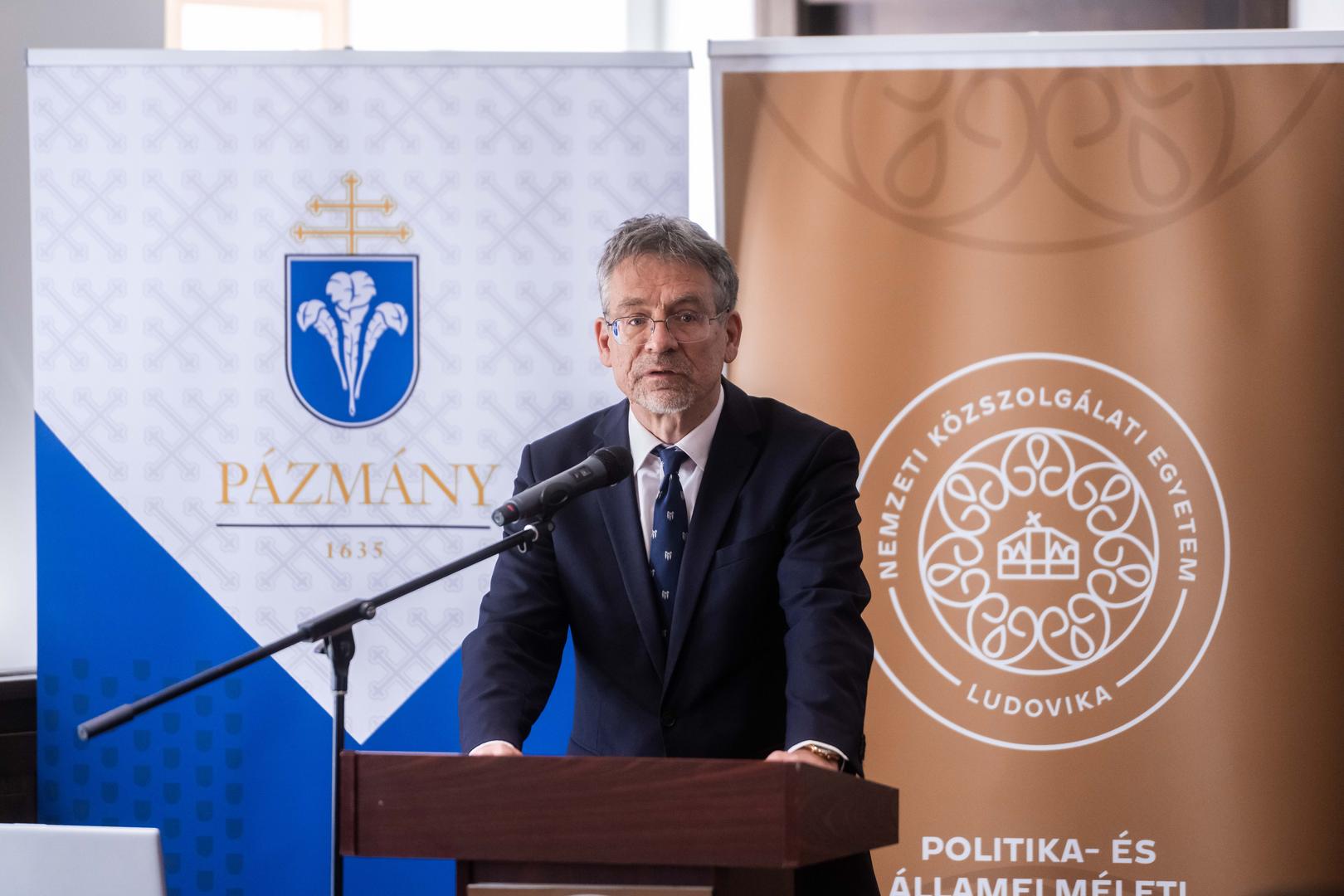
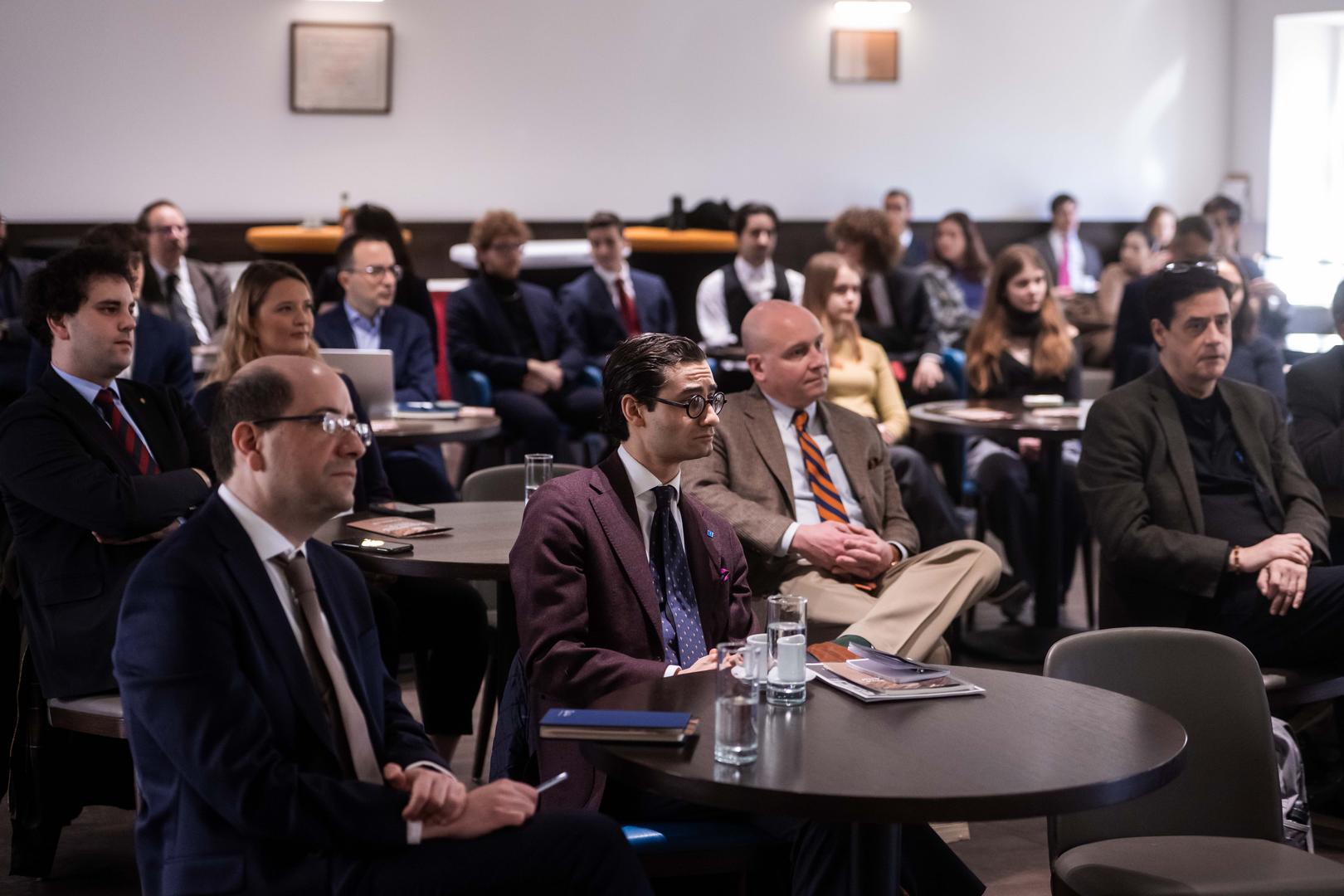
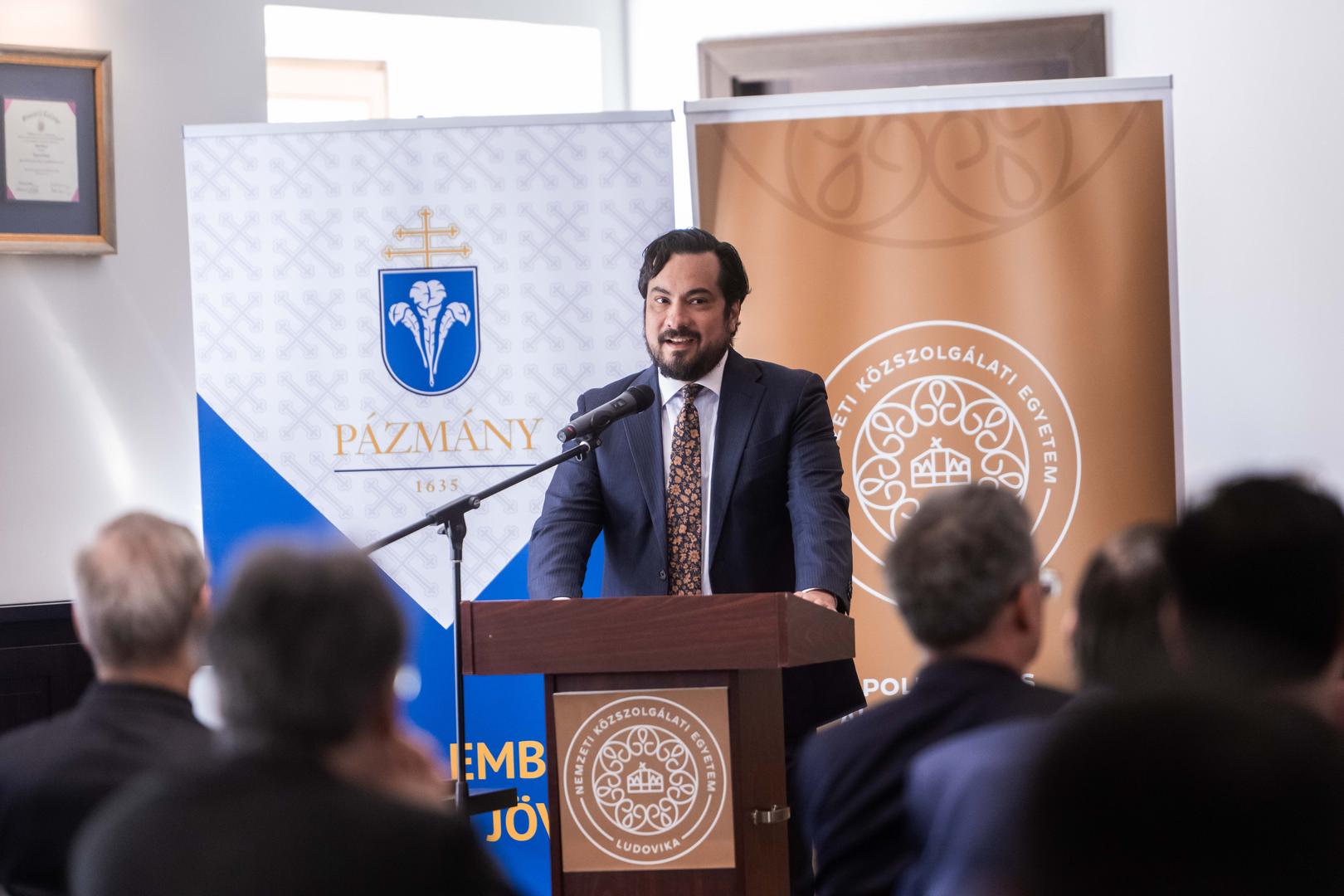
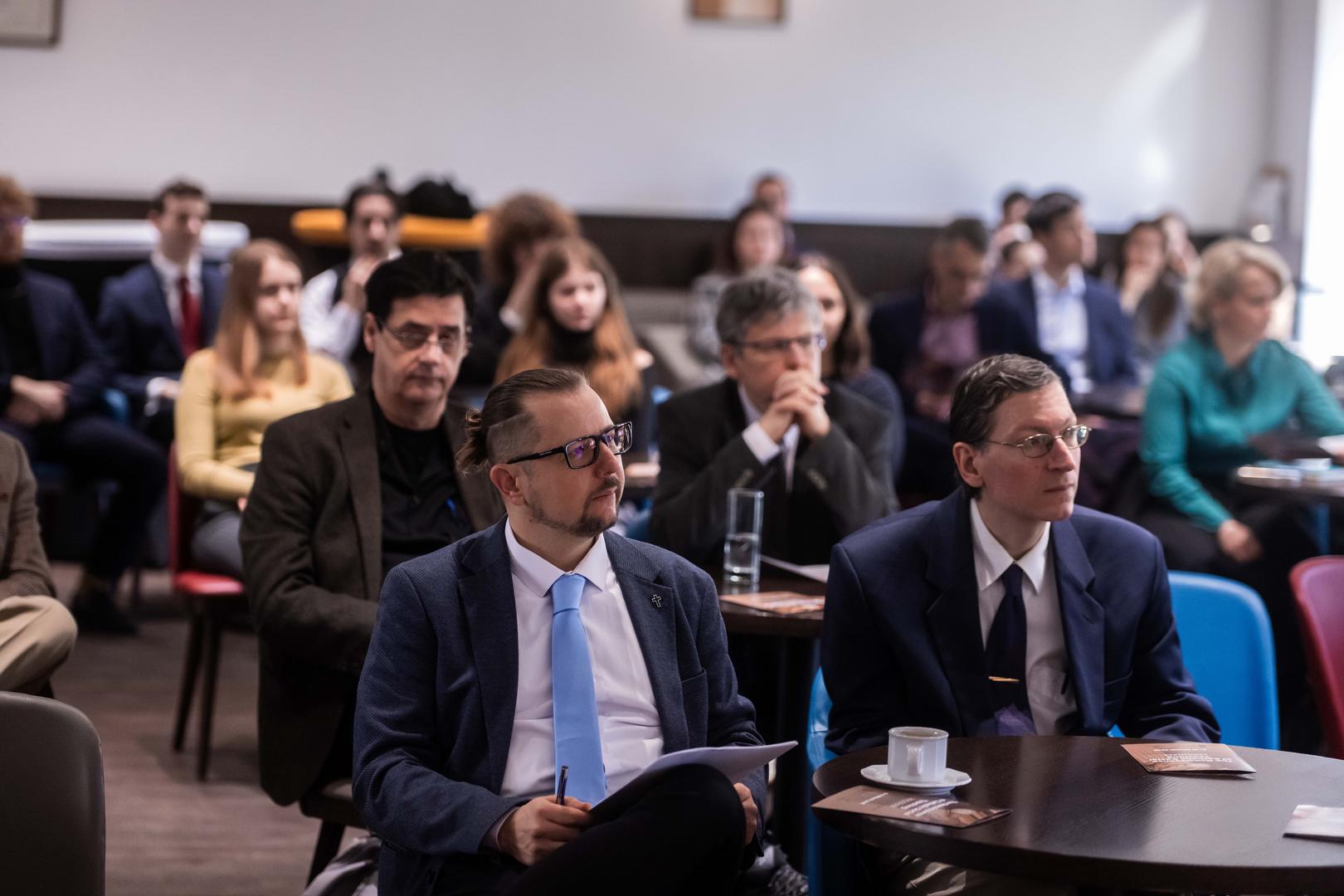
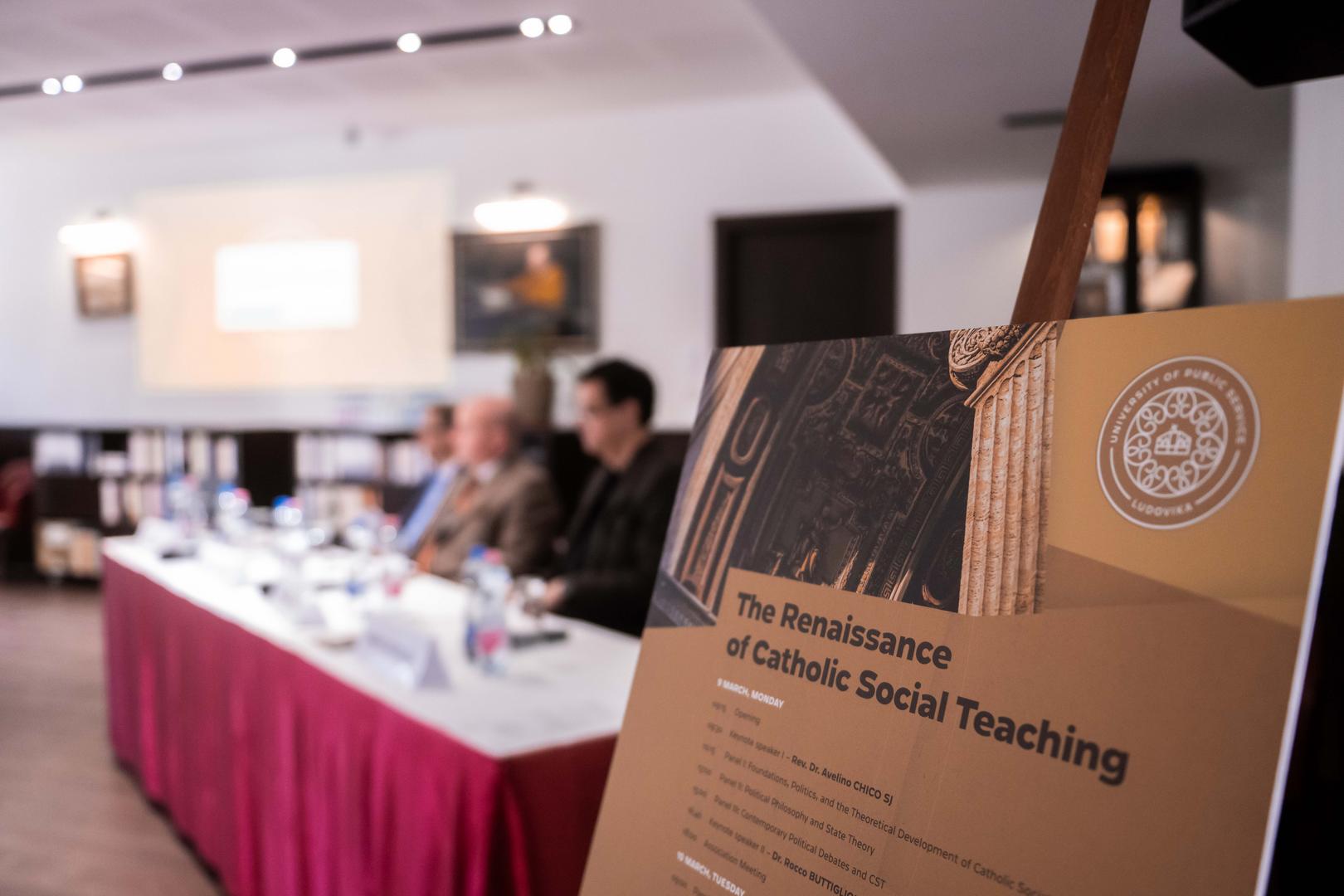
On 9–10 March 2026, a two-day international conference was held at the John Lukacs Lounge of the Ludovika Side Building discussing the Renaissance of the Social Doctrine of the Catholic Church, co-organized by the Ludovika University of Public Service and Pázmány Péter Catholic University.
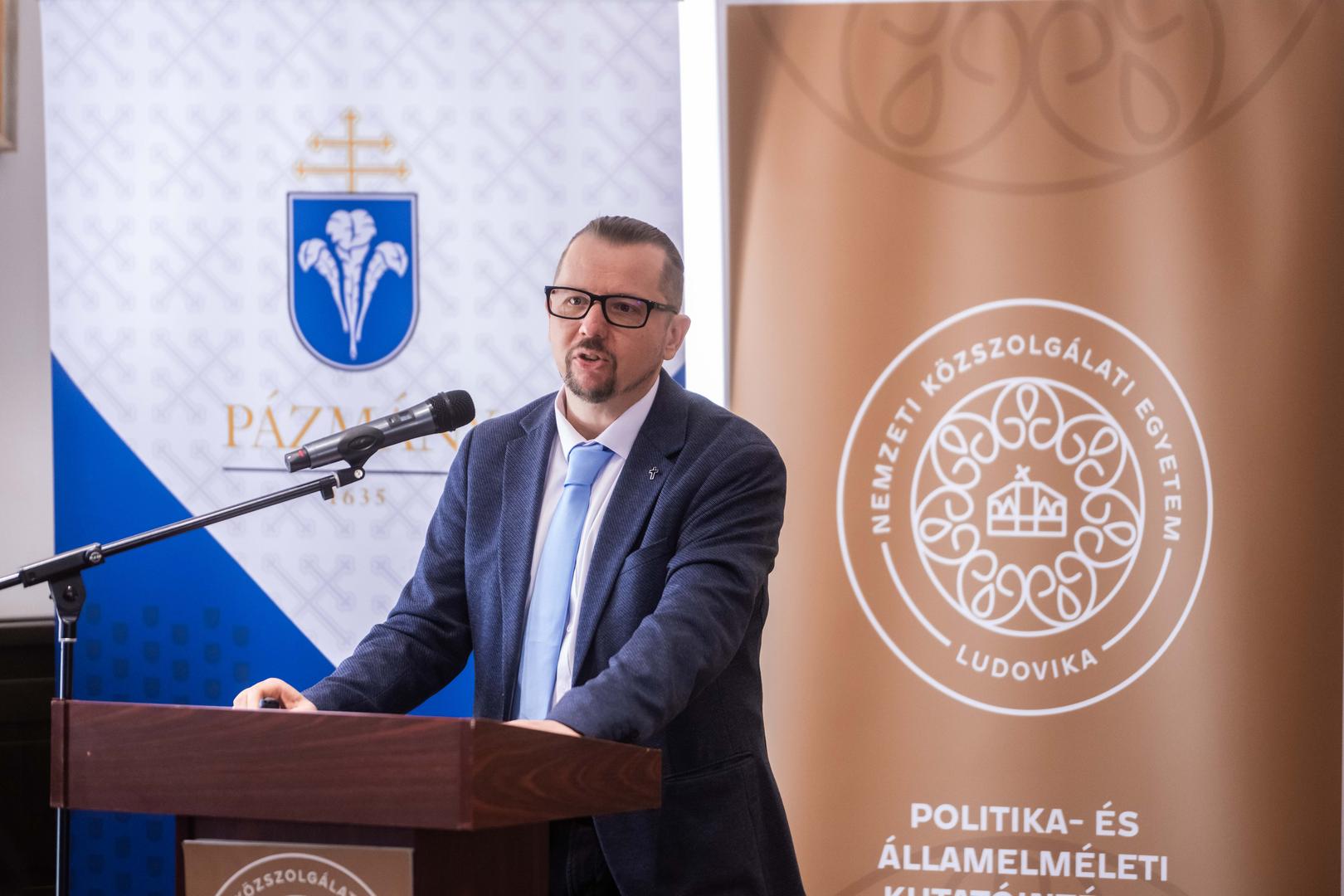
At the beginning of the opening day of the conference, participants were greeted by Ferenc Hörcher, director of the Research Institute for Politics and Government of the Eötvös József Research Centre at Ludovika UPS, and Pier Paolo Pigozzi, vice-rector for international affairs at Ludovika UPS.
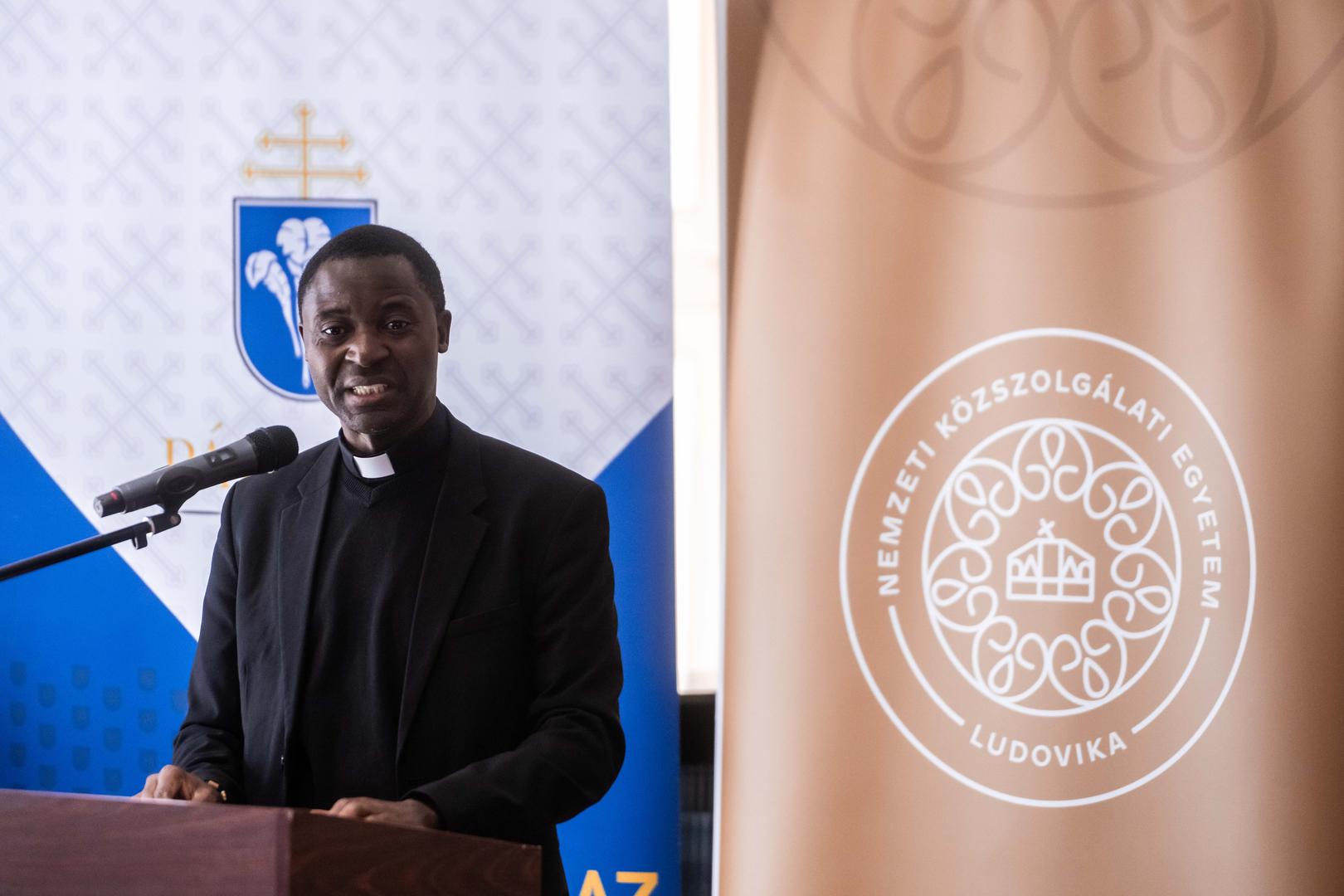
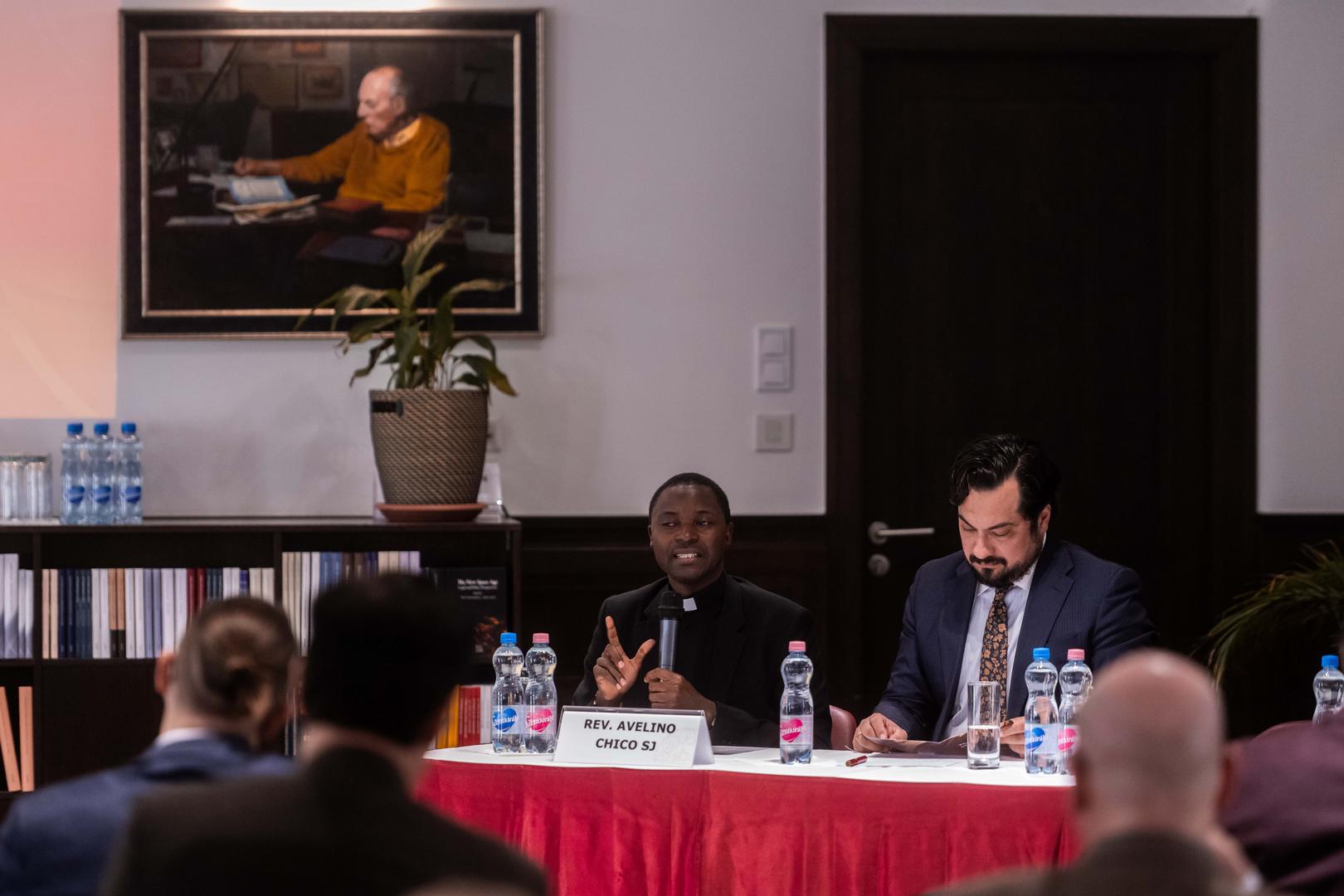
The first keynote lecture was held by Rev. Avelino Chico SJ, Head of Office at the Dicastery for Promoting Integral Human Development at the Vatican. Fr. Chico informed the audience about the ongoing contribution of Pope Leo XIV in the development of Catholic Social Teaching, centred around the concept of integral human development, taking into account spiritual, cultural, political, and economical factors as well.
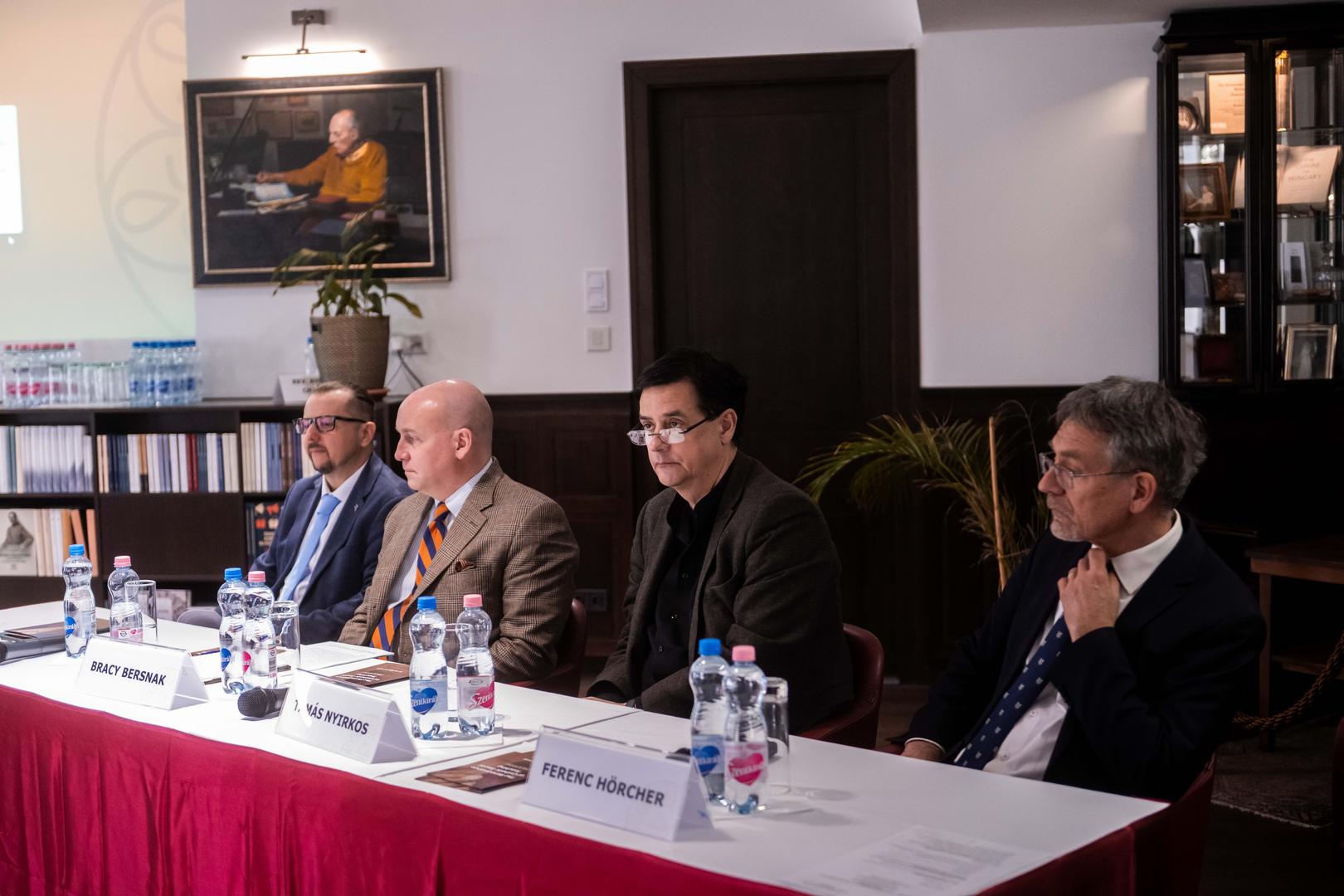
The first panel of the conference, under the title “Foundations, Politics, and the Theoretical Development of Catholic Social Teaching” contained four lectures. Péter Krisztián Zachar (Ludovika UPS) gave an overview of the intellectual background of the founding of the Catholic Social People’s Movement. Bracy Bersnak (Christendom College) put the ideas of “Jacques Maritain on Democracy and the Nation State” under scrutiny. Tamás Nyirkos (Ludovika UPS) assessed the problematic relationship of Christianity and democracy. The opening panel finished with the lecture of one of the organizers of the conference, Ferenc Hörcher, Director of the Research Institute for Politics and Government at Ludovika UPS, who elaborated his views on the role of the cardinal virtue of Prudence in Catholic Social Thought.
The second panel of the conference discussed the relationship of Catholic Social Thought to Political Philosophy and State Theory. Cornelis J. Schilt (Lux Mundi) assessed the importance of the practical implementation of the social message of the Gospel as a basis and motivation for action. Olga Kovács-Latyseva (Axioma Center; Pázmány Péter Catholic University) discussed the indirect influence of the political theology of 19th-century Spanish counterrevolutionary political actor and thinker Juan Donoso Cortés on the development of Catholic Social Teaching. András Jancsó (Ludovika UPS; Pázmány Péter Catholic University), one of the organizers of the conference presented an overview of the ideas of Joseph Ratzinger (later Pope Benedict XVI) on the pre-political foundations of the liberal state. Ádám Darabos (Ludovika UPS; Axioma Center) compared Catholic Social Thought with the insights of 20th-century American Protestant Christian Realism.
The third panel of the conference under the title “Contemporary Political Debates and Catholic Social Thought” started with a short lecture by Bishop János Székely, head of the Hungarian Bishops’ Conference, who emphasized that human freedom cannot be separated from following God’s will, as only the Truth can set us free. Michal Gierycz (Cardinal Stefan Wyszyński University) elaborated his views on the “new paradigm of Catholicism” and its possible impact on Catholic Social Thought. Nicholas McAfee (Christendom College) discussed the confusion of political form in contemporary Catholic Political Thought from an American perspective. Alberto Garzoni’s (University of Oxford) lecture dealt with the problem of conflicting loyalties of Catholics in light of the upcoming Hungarian elections. The joint-lecture of Javier Crevillén (Villanueva University) and Juan Pablo Serra (CUNEF University) assessed the issue of how Catholic Social Teaching should respond to the challenge of mass-migration.
The opening day of the conference concluded with the keynote lecture of Ryszard Legutko (Jagellonian University), one of the leading Catholic intellectuals of our times. Prof. Legutko spoke about the decline of the Western world that also impacted the Catholic Church since the Second Vatican Council.
After Prof. Legutko’s lecture, an inaugural association meeting was held with the participation of many speakers of the conference, where the new scholarly institution Association for the Renewal of Catholic Political and Social Thought was officially established.
The second day of the conference opened with a panel titled “Community Life and the Common Good”. William Hannegan (Christendom College) traced back the causes behind the collapse of Catholic practice in the USA during the second half of the 20th century to a general trend of individualization and atomization of society. Christian Machek (Europa Aeterna – Akademie für politische Philosophie) assessed the issue of the renewal of Catholic Social Teaching from a perspective of the Thomistic-Scholastic tradition of philosophy and metaphysics. Kálmán Tóth (Ludovika UPS) discussed the undermining of the moral foundations of the Catholic Church, and warned that if the Church wants to preserve its social relevance, it cannot make concessions to mainstream woke ideology. The last lecture of the session was the online presentation of Alonso Ignacio Salinas García (Pontifical Catholic University of Chile), who elaborated his views on the need for re-enchantment through Catholic Political and Social Thought.
The fifth panel of the conference titled “Morality, Art and the Global Church” started with the lecture of Rev. Loránd Ujházi (Ludovika UPS; Pázmány Péter Catholic University), who presented an overview of the geopolitics of the Holy See and its connections to shifting theological principles. Alex Taylor (Christendom College) addressed the place of Art in Catholic Social Teaching, meanwhile Rhianwen Daniel (City Lit) assessed the influence of Catholic Social Teaching on the development of Polish and Welsh nationalisms. The lecture of Rev. Piotr Mazurkiewicz (Cardinal Stefan Wyszyński University) dealt with the role of natural law in the political and social thought of Joseph Ratzinger (Pope Benedict XVI). Ahead of the closing panel, the keynote lecture of Prof. Rocco Buttiglione, who could not attend due to illness, was read. The lecture discussed the relevant topics of the renewal of Catholic Social Doctrine.
The closing session of the conference titled “Contemporary Political Debates and Catholic Social Thought” started with the lecture of Antonio Campati (Catholic University of the Sacred Heart) on the relationship between Illiberal Democracy and Catholic Social Doctrine. Károly Mike (Eötvös Loránd University) elaborated his views on the moral question of how to respond to the innocent suffering. Máté Botos (Pázmány Péter Catholic University) discussed the potential for implementation of Andrea Komlósy’s work theory into Catholic Social Teaching’s interpretation of labor.
The two-day international conference concluded with a general discussion of the topics raised by the lectures, which can be summed up as a discourse about the tension between the historically changing focus and content of Catholic Social Thought reflecting changing social reality, the unchangeable Truth of the Gospel, and reference to Natural Moral Law.
Kálmán Tóth
research fellow
Ludovika UPS EJRC Research Institute for Politics and Government
Photo: Dénes Szilágyi